International funding and South Africa's economy

Global and local partnerships support urgently needed infrastructure upgrades.
South Africa's economy has been stagnating for several years. Public debt levels are escalating, and government has struggled to invest in key infrastructure projects across different sectors – developments essential for sustaining job creation, improving cost-effective import-export trade, and beneficiating industries.
Several fiscal stimulus solutions have been suggested, not all of them popular. The Minister of Finance's attempt to raise value added tax in the 2025 Budget was rejected by parties within the Government of National Unity (GNU). Government now appears to have no option but to rely on borrowing to finance critical investment in infrastructure and job creation.
But where does that borrowing come from, and what does it mean for SA's economic growth?
The World Bank's R26 billion loan
The GNU and the World Bank recently signed a development policy loan agreement for US$1.5 billion (roughly R26 billion) to invest specifically in South Africa's services infrastructure. The loan targets 3 key pillars of economic reform:
- Improving energy security.
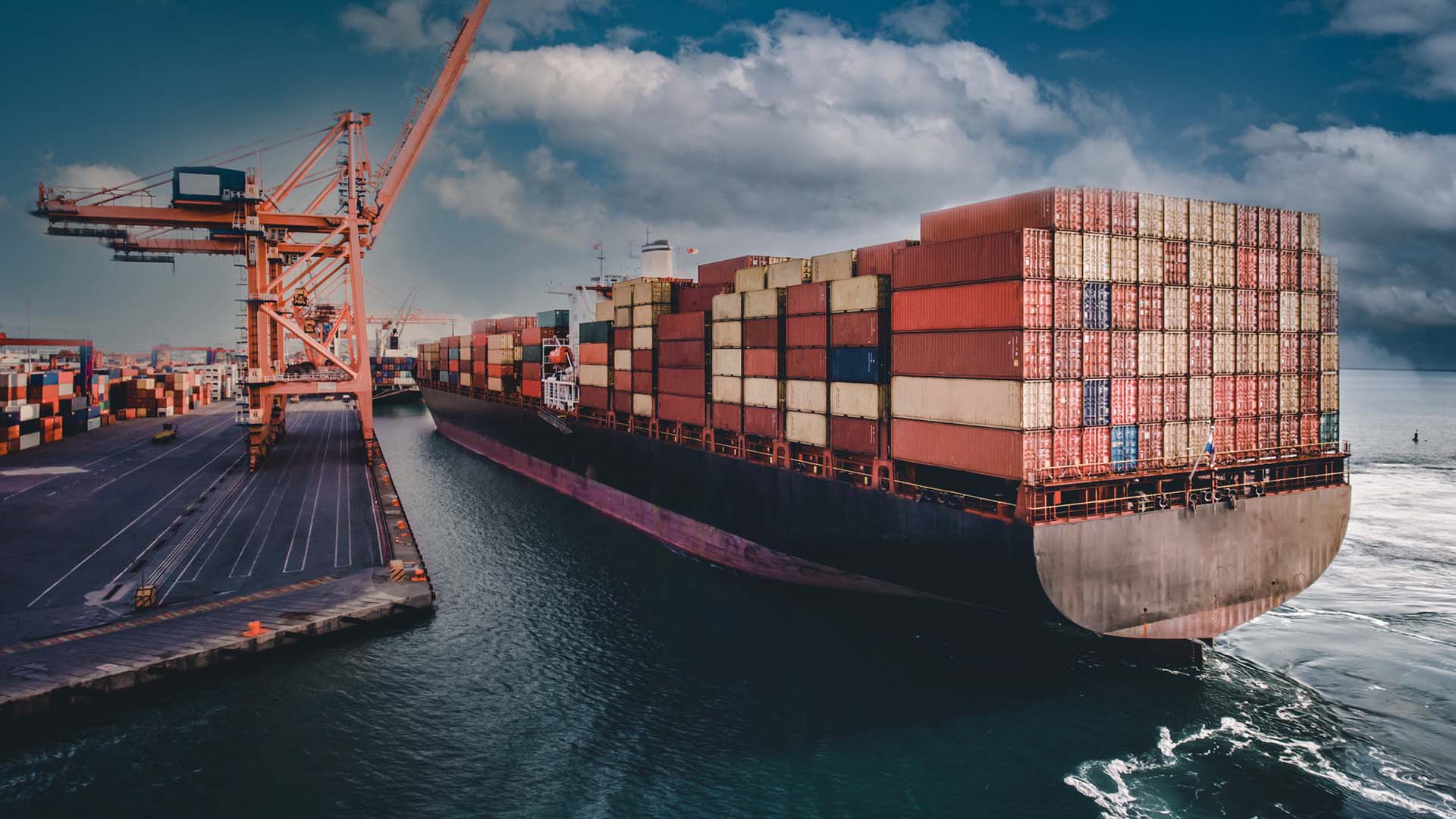
- Enhancing the efficiency and competitiveness of freight transport services.
- Supporting SA's transition toward a low-carbon economy.
Government regards all 3 as critical enablers of inclusive growth and job creation.
The loan has favourable terms: a 16-year repayment period, an initial 3-year grace period, and a floating interest rate tied to a 6-month secured overnight financing rate. This rate, published by the Federal Reserve Bank of New York, reflects the average interest rate for secured overnight loans in US dollars. On top of these terms, South Africa will pay an extra 1.49% in interest.
The World Bank intends the loan to serve as general budget support, releasing the funds in instalments on condition that government meets agreed reform milestones across state infrastructure institutions such as Eskom and Transnet. Payments are tied to measurable regulatory or governance benchmarks – such as unbundling electricity transmission and enabling third-party rail access – designed to unlock future private capital inflows.
Infrastructure investment
The borrowing doesn't end there. The World Bank is also considering a US$50 million contribution to a proposed credit guarantee vehicle meant to underwrite South Africa's planned US$25 billion transmission build-out. This financing vehicle is designed as a standalone fund to unlock private sector participation in building up to 20 GW of installed renewable energy capacity, particularly in remote provinces like Northern Cape and Eastern Cape. Discussions on cofinancing this project are underway with potential partners, including the International Finance Corporation, the Development Bank of South Africa, and British International Investment.
The G20 and B20 offer a platform for PPP success – if plans can be implemented and fast-tracked
Transnet and Eskom will benefit financially from these loans, but many commentators argue that structural economic change is essential for SA to reap the benefits. Government has also announced that it is managing an even larger loan package totalling about R54 billion from international lenders, including the World Bank, African Development Bank, and the KfW Development Bank in Germany. These funds aim to support municipal projects and initiatives to improve service delivery and strengthen local government operations nationwide.
South Africa's development vs debt-to-GDP ratio
These loan deals come amid growing concerns about SA's escalating debt levels relative to gross domestic product (GDP). Our debt-to-GDP ratio has risen from 23.6% in 2008/09 to a projected 74.7% in 2024/25. The International Monetary Fund (IMF) suggests an international benchmark of 60%.
The IMF projects meagre growth of 1% for SA's economy this year, with further marginal growth of 1.3% in 2026. These projections reflect insufficient progress in implementing reforms, particularly in key network industries such as logistics and energy. They are less optimistic than those of South Africa's National Treasury, which anticipates growth of 1.4% in 2025 and 1.6% in 2026, and the South African Reserve Bank's prediction of 1.2% growth in 2025, rising to 1.8% by 2027.
Despite the near disappearance of national loadshedding since 2024, the unreliable availability of electricity remains an issue. South Africa is still held back by many years of underinvestment in infrastructure, creating significant gaps in transport and electricity networks. To close these gaps, government has long sought private sector funding and expertise through private-public partnerships (PPPs).
Business has become more open to PPPs recently, driven by regulatory changes and stronger action against corruption and fraud. Government is also working to improve SA's international investment rating and has engaged with private business organisations to strengthen public-private cooperation.
South Africa's presidency of the G20 in 2025 gave us the chance not only to use political alliances to improve infrastructure development and funding, but also to focus on the business part of the summit: the B20. Collaborating on finance and infrastructure was a key priority. The G20 and B20 offer a platform for PPP success – if plans can be implemented and fast-tracked to accelerate SA's economic growth.
Nedbank is actively involved in a range of infrastructure investment initiatives through our CIB division, which also hosted a high-level, Africa-wide transport infrastructure conference in 2024.