Which appliances guzzle power and waste money?

Change appliances and habits to cut your electricity bill and make solar more affordable.
Have you ever considered how much of your electricity bill is generated by a few high-impact appliances that use a lot of power? Anything that produces heat or stays on all day could be a culprit. Cutting your household expenses starts with understanding which appliances are the biggest guzzlers of electricity.
If you want to save money on electricity, you need to know how much power each appliance uses in kilowatt hours (kWh), and how much you’re paying for every kWh.
Note:
- A kilowatt (kW) is a measure of power. A 1 kW appliance operating at maximum power draws 1 kW of electricity continuously from the power source.
- A kWh is a measure of the total energy used. A 1 kW appliance that operates for 1 hour uses 1 kWh of electricity. The cost of your electricity depends on the number of kWh (often called ‘units’) you use in a month, multiplied by the tariff rate per unit that your supplier charges.
What appliance power use costs
Most South African households pay between R2.80/kWh and R3.91/kWh for electricity. Your total monthly bill depends on your supplier’s tariff rate, any service or line fees they charge, and your consumption – electricity tariffs are scaled to discourage wasteful use, so if you use enough to qualify for a higher tariff band, you’ll pay more per unit. You can check your previous bills to work out how much power you use every month, but not which appliances are using the most.
To identify the power guzzlers, you need to know how much power an appliance uses, and how many hours a day it is operating. The following examples outline the approximate costs of various appliances at both the lowest and highest tariff rates.
Geyser – heavyweight champion of power consumption
A conventional electric geyser is one of the largest contributors to average electricity use because it uses a lot of power to heat water by electrical resistance in the element, then reheat it several times a day to maintain the temperature. Typical electric geysers consume between 9 and 15 kWh of electricity a day, depending on the size of your household and your hot-water habits.
That’s an average of 12 kWh/day, or around 360 kWh/month. At R2.80/kWh, that works out to R1,008.00 a month. At R3.91/kWh, it costs R1,407.60. The true cost will vary according to tariff scaling and geyser use – but whatever the exact figure is, it makes up a large part of your electricity costs.
Here are a few simple, high-impact ways to cut your water heating costs:
- Use a timer or smart control so you’re not heating water when nobody needs it.
- Adjust the temperature so that the water is comfortably hot enough to use, but not so hot that you need to add cold water to wash or shower in it – overheating your water is just wasted energy.
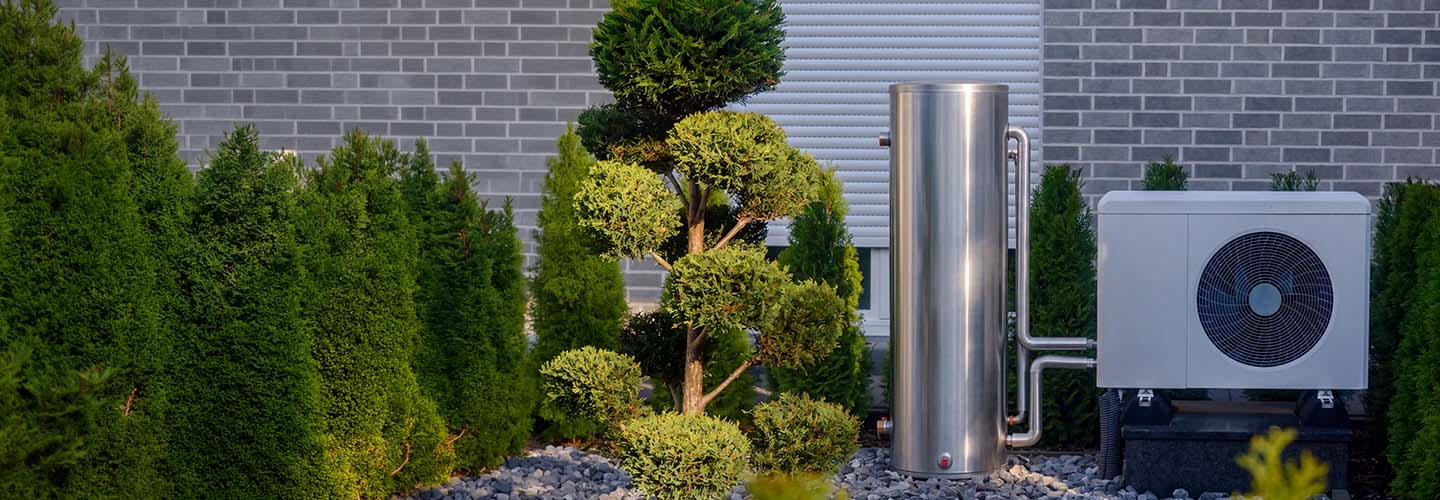
- Consider replacing your geyser with an integrated heat pump (IHP).
Replace your stovetop and oven with smaller, more energy efficient appliances like an induction hob and air fryer
What is an IHP?
Conventional geysers use electrical current flowing through a high-resistance element to heat water, just like a kettle. The higher the resistance, the more power you need to keep current flowing, which increases your electricity costs. In contrast, an IHP works like a fridge or air conditioner in reverse – it uses a volatile fluid in a sealed system, alternating pressurisation at one end with decompression at the other, to move heat around.
Only, instead of removing heat from a fridge and releasing it into the air, an IHP removes heat from the air and releases it into a water tank. As a result, the system uses a lot less energy than traditional resistance geysers – the most efficient performers use less than 2 kWh a day and can save you up to 85% on your water-heating power bill. That said, it can be a little noisier than a resistance geyser, because it uses a compressor to move heat around, not an element.
The efficiency of your IHP depends on upright, ground-level placement (often outdoors), how you use timers or app scheduling, and, to an extent, the ambient atmospheric conditions. IHPs also have a resistance element backup, to help the heat pump when ambient conditions aren’t optimal, so your actual power saving will depend on how often the resistance element is needed.
You should be prepared for the upfront cost. An IHP is more expensive than resistance geysers – expect to pay just over R30,000 for a fully installed system with a 200 l tank. But the savings on your electricity bill should more than repay your investment over the lifetime of the IHP.
Space heater – silent power drain
Electric heaters are convenient, but their power use can be intense. Many home space heaters use 1,500 W at full power, so they add 1.5 kWh of consumption to your electricity bill for every hour they run. Use it for just 5 hours, and you’ll pay for 7.5 kWh. At R2.80/kWh, that costs R21.00 – or R29.33 at the R3.91 rate.
If you use just one 1,500 W heater for 5 hours a night, every night in winter, it’s adding between R630.00 and R909.00 to your monthly electricity bill.
Ways to cut heating costs:
- Improve the insulation and draft prevention in your home.
- Research which heaters are most economical for the size of the space you want to heat. In smaller rooms, wall-mounted panel or oil fin heaters can be much cheaper to run than bar or fan heaters.
- Heat your home in zones, so you only heat rooms when they’re in use.
- Choose a heater with a thermostat so it cycles on and off as needed, rather than running flat-out.
Tumble dryer – high consumption but less frequent use
Tumble dryers produce heat for an hour or more at a time, so electricity use can be high per cycle – typically, between 2 and 4 kWh. But most people only use their dryers 8 or 9 times a month, so the total monthly consumption is somewhere between 16 kWh (8 x 2 kWh) and 36 kWh (9 x 4 kWh). At R2.80/kWh, that costs between R44.80 and R100.80 a month. At R3.91/kWh, it costs between R62.56 and R140.76.
Even at top consumption, that doesn’t look like a lot – especially compared to a geyser – and in the rainy season, a dryer can be more of a necessity than a luxury. But any saving is good, so keep a tighter rein on electricity costs by using your tumble dryer more efficiently.
Consider these tips:
- Air dry outdoors whenever possible and use your tumble dryer only when needed.
- Use the right washing machine settings to give laundry a thorough final spin dry.
- Tumble-dry full loads, but don’t overload the machine.
- Keep filters clean so airflow stays efficient.
Electric stove – massive power draw while cooking
Ovens don’t run all day, but they use a great deal of power when they’re on – depending on the model, a resistance element oven can draw 2,000 to 5,000 W. An oven drawing 2 kW uses 2 kWh every hour, costing between R3.60 and R7.92. At full power, a 5 kW oven costs between R9.00 and R19.55/hour. Using your oven for 30 hours a month (for example, for 2 hours on 15 days) will cost somewhere between R108.00 and R586.50, depending on the model’s power requirements and the temperature setting you use most often.
Stove plates draw 3,000 W of power or more, so if you’re using 2 plates for an hour, you’ll use at least 6 kWh. If you run 2 stove plates for an hour over 16 days of the month (when you don’t use the oven), total power consumption is 96 kWh. That’s between R268.80 and R375.36/month. Add that to your oven use, and your monthly cooking costs total between R376.80 and R961.86 – or R669.33 on average. It’s not as expensive as your geyser, but cooking could be taking as much of your money as heating.
The following ideas can help you cut down:
- Batch cook and freeze meals in portions for microwave reheating as needed.
- Keep the oven door closed when in use.
- Use stacked steamers to cook multiple ingredients at once.
- Replace your stovetop and oven with smaller, more energy efficient appliances like an induction hob and air fryer.
- Investigate solar ovens, Wonderbags, and gas or other non-electric cooking options.
Because a geyser can contribute so much to your total power costs, you might seriously consider replacing yours with an IHP
Fridge and freezer – steady low consumption
Fridges and freezers are always on, but they use maximum power only when the motor and cooling system are running to remove heat. Effective insulation keeps the temperature stable when the unit is closed, so the motor stays switched off until the temperature rises to a preset level on the thermostat.
The result is that most full-size modern fridges and freezers each use around 2 kWh/day at most. If you use both, they’ll add around 120 kWh to your monthly consumption, at a cost of between R336.00 and R469.20.
To keep your costs lower, adopt the following refrigeration habits:
- Decide what you’re getting out of the fridge or freezer before you open it, so you don’t stand with the door open, searching for something you fancy.
- Keep items arranged neatly in sections, so you’ll always know where to find what you need, also to minimise opening times.
- Don’t put anything hot into a fridge or freezer – wait for it to cool to room temperature.
- Keep coils clean and seals tight – poor maintenance can push up consumption.
Washing machine – avoid the hot cycles
A washing machine’s energy use varies heavily, because hot washes use much more power to heat water than a cold wash, which uses electricity only to rotate the drum. While the machine may need only 400 W to operate on a cold cycle, power draw can ramp up to 1,400 W for a hot wash.
So, a short, cold wash may only consume 0.3 kWh, while a multistage hot wash could use as much as 2 kWh. For example, if you were doing 10 cold washes and 5 hot washes a month, you’d use a total of 13 kWh – but 5 cold washes and 10 hot washes would consume 21.5 kWh
13 kWh works out at between R36.40 and R50.83, and 21.5 kWh will cost you between R60.20 and R84.07. This won’t be a major drain on your bill, but you can still minimise it by doing the following:
- Use cold water and a short-cycle wash as often as possible.
- Wash only full loads, but don’t overload your machine.
- Use stain removers, and washing detergents that include fabric softener, to cut down on repeated washes and the number of rinses needed per cycle.
Kettle – short, energy-intensive bursts, but don’t overfill
Many kettles draw more than 2,000 W when operating, but they never need to operate for very long. Boiling 1 litre of water typically uses around 0.10−0.12 kWh, depending on the starting temperature and the element’s efficiency.
But what if you boil 1 litre of water when you only need 250 ml to make a cup of coffee? Whether it has the lowest potential cost – 28 cents – or the highest – 47 cents – that’s 750 ml boiled for no reason, and 75% of your electricity payment wasted. If you add another 250 ml of cold water before you boil it for your next cup of coffee, you’re compounding the problem.
If you make 6 hot beverages a day, you could be spending more than R750.00 a year on wasted electricity. Always boil only as much water as you need – and save a few more cents every time by switching the kettle off manually as soon as it boils. Automatic switch-offs take a while to sense that water is boiling.
Measure and manage with a power consumption meter
Financial wellbeing is about visibility, and if you don’t measure power use accurately, you’re budgeting for it blind. If you’re tired of guessing and trying to do calculations with municipal tariff rates, use a plug-in power consumption meter (also called a power usage meter, power draw meter, or power usage monitor) to measure real-time power use and cumulative kWh on any plug-in appliances. That gives you a clear picture of an appliance’s true power consumption.
Geysers and stoves won’t plug into a meter, so use a distribution-board monitor (aka a whole-home monitor for electricity usage) to identify trends in your power use. When you know where you’re wasting the most electricity, you can plan cost reductions.
Lower consumption makes solar solutions more affordable
Once you’ve cut down on the amount of power your appliances are using, affordable solar solutions become more effective. Your solar power system will need a lower peak capacity, which will reduce the number of batteries and solar panels you need. Your own renewable power system also reduces the amount of power you need to draw from the grid, which will reduce your electricity bill even more. Find out how Avo Solar makes the process of buying and installing a system less hassle and more affordable.
And because a geyser can contribute so much to your total power costs, you might seriously consider replacing yours with an IHP. Avo’s expert partner, Power4Less, offers both 200 l and 300 l IHPs compatible with a 5 kW inverter, which you can pay off in one amount, or finance either as part of your solar installation or as a stand-alone deal. And Greenbacks members get up to 10% off!